

6 Commercial Real Estate Trends In 2026
The commercial real estate market entering 2026 looks materially different than it did just a few years ago. Capital is more selective. Tenants are more demanding. Cities and suburbs are being re-priced based on how people actually live and work, not how they did in 2019. For owners, developers, and occupiers alike, success in 2026 will depend less on chasing trends and more on understanding the structural forces reshaping demand, underwriting, and long-term asset performance.
Below are six commercial real estate trends that are already taking shape and will meaningfully define market behavior throughout 2026.

1. Operational Real Estate Is Outperforming Pure Financial Real Estate
In 2026, the strongest commercial assets are increasingly those that support core business operations rather than those purchased purely as financial instruments. Industrial facilities tied to logistics, advanced manufacturing, cold storage, life sciences, healthcare, and mission-critical data uses continue to outperform traditional discretionary office and retail formats.

This shift reflects a broader repricing of risk. Assets that are embedded in supply chains or essential services benefit from longer lease terms, higher switching costs, and greater tenant stickiness. Investors are underwriting cash flow durability rather than upside speculation. Tenants are prioritizing reliability, proximity to labor, and operational efficiency over prestige addresses.
For owners, this means asset management matters more than ever. Strong commercial property management, focused on uptime, responsiveness, compliance, and cost control, has become a primary value driver rather than a back-office function.
2. The Office Market Is Splitting, Not Recovering Uniformly
By 2026, it is no longer accurate to speak about “the office space market” as a single category. The divide between high-quality, well-located, amenitized buildings and commodity office space continues to widen.

Class A offices with strong transit access, natural light, flexible floorplates, modern HVAC systems, and thoughtful tenant experience programming are leasing. Commodity Class B and C offices without clear reinvestment strategies are struggling to retain tenants, often competing primarily on price.
Hybrid work is no longer the headline. The real story is utilization efficiency. Tenants are designing offices to support collaboration, training, and culture rather than daily headcount maximization. Buildings that cannot adapt to these needs face functional obsolescence.
In this environment, a knowledgeable commercial real estate agent adds value not by simply marketing square footage, but by helping tenants and owners align real estate decisions with long-term workforce strategy and capital planning.
3. Industrial Demand Is Normalizing, But Structural Tailwinds Remain
Industrial real estate entered 2026 after several years of rapid expansion. While headline absorption has moderated, the underlying fundamentals remain strong. Nearshoring, inventory re-balancing, automation, and last-mile distribution continue to support demand across most major U.S. markets.
What has changed is selectivity. Tenants are more price-sensitive and more disciplined about facility specifications. Clear heights, power capacity, trailer storage, dock ratios, and zoning flexibility matter more than ever. Secondary locations without infrastructure investment are falling behind.

From an investment perspective, the market is rewarding assets that can evolve. Buildings capable of accommodating automation, heavier power loads, or multiple tenant profiles are commanding premiums. Inflexible, shallow-bay, or functionally constrained facilities are facing longer lease-up timelines.
For developers and owners, industrial success in 2026 is less about building volume and more about building optionality.
4. Adaptive Reuse Is Becoming a Core Strategy, Not a Niche
Adaptive reuse has moved from opportunistic to strategic. Across office, retail, and institutional real estate, owners are increasingly evaluating whether existing assets can be repositioned rather than replaced.
Office-to-industrial conversions, office-to-residential projects, retail-to-medical retrofits, and university-adjacent reuse strategies are gaining traction as land costs rise and entitlement timelines lengthen. In many cases, reuse offers a faster path to stabilization with lower total capital outlay than ground-up development.
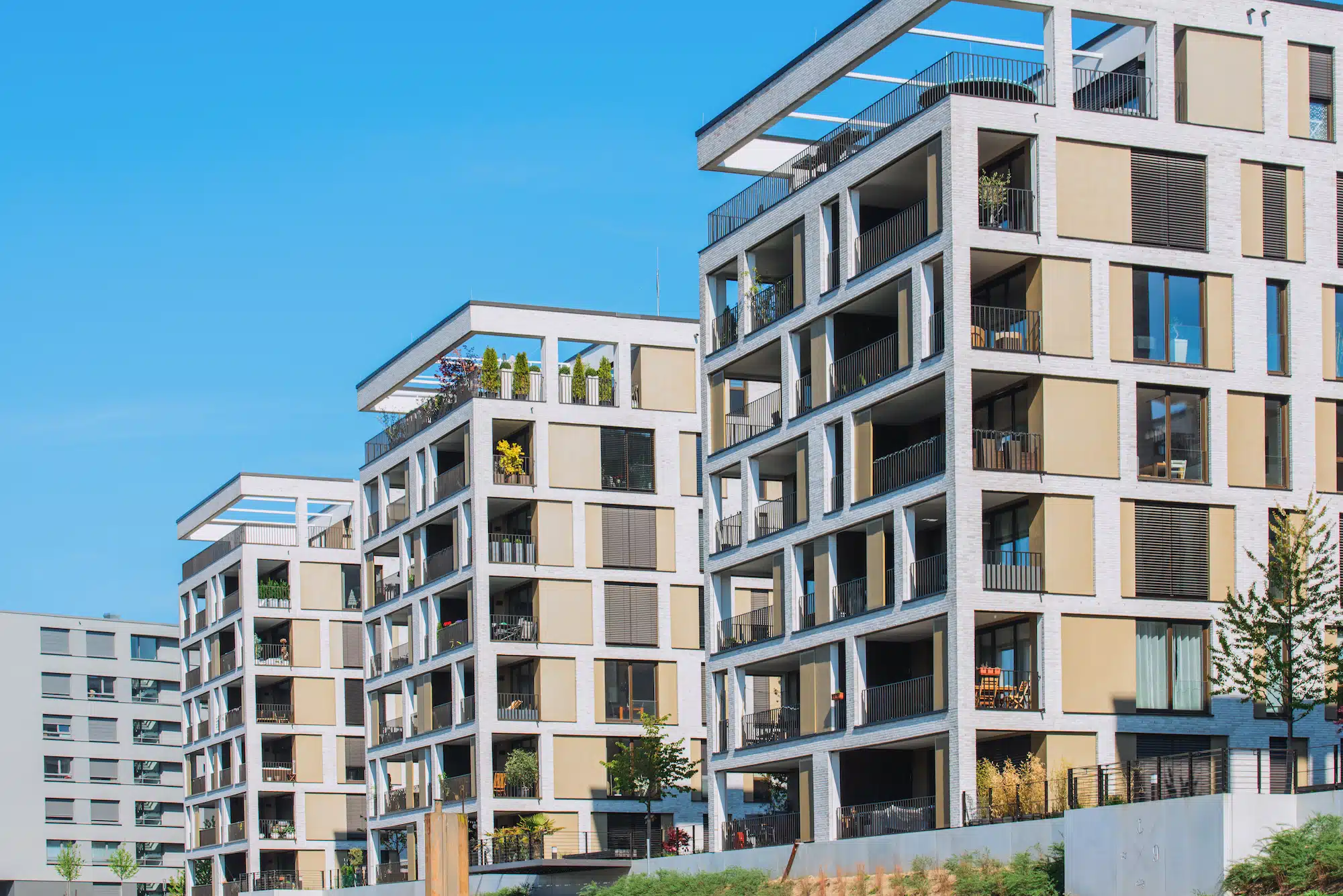
Successful reuse projects require deep due diligence and coordinated execution. Structural grids, floor-to-floor heights, loading, mechanical systems, and zoning overlays all matter. This is where experienced advisory teams and a strategic commercial real estate broker can materially reduce risk by identifying viable paths early in the process.
5. Data, Transparency, and Real-Time Decision Making Are Now Expected
In 2026, data is no longer a competitive advantage; it is table stakes. Owners, investors, and occupiers expect real-time visibility into operating costs, energy usage, occupancy, and portfolio performance.
Property technology adoption continues to accelerate, particularly in asset management, leasing analytics, and predictive maintenance. Tenants increasingly want clarity around total occupancy cost, not just base rent. Investors are scrutinizing operating efficiency and capital expenditure forecasting with greater rigor.

In this environment, the role of professional management and advisory services becomes more consultative and less transactional.
6. Capital Is More Disciplined, Favoring Long-Term Fundamentals
Perhaps the most defining trend of 2026 is the shift in capital behavior. After years of cheap debt and aggressive underwriting, investors are now prioritizing durability, downside protection, and realistic exit assumptions.
Debt markets remain selective. Equity partners are demanding clearer business plans, conservative rent growth assumptions, and demonstrable operational expertise. Assets that rely on aggressive future appreciation rather than current cash flow are facing increased scrutiny.
This environment favors experienced operators and patient capital. It also rewards markets with diversified employment bases, infrastructure investment, and demographic stability. For buyers and sellers alike, pricing clarity matters more than momentum.
Advisors who understand both capital markets and on-the-ground leasing dynamics are best positioned to guide clients through this more disciplined phase of the cycle.
Looking Ahead
Commercial real estate in 2026 is not about predicting the next big trend. It is about adapting to a more rational, operationally focused market where execution matters as much as vision.
Assets that support real economic activity, can evolve, and are managed with discipline, will continue to outperform. Owners and occupiers who align real estate strategy with business fundamentals will be better positioned to navigate uncertainty. And professionals who bring clarity, data, and long-term thinking to the table will remain indispensable.
The industry is not contracting; it is maturing. Those who recognize that shift early will have a meaningful advantage in the years ahead.
For a consultation on future-proofing your real estate assets, reach out to our team of commercial real estate agents for more tips!