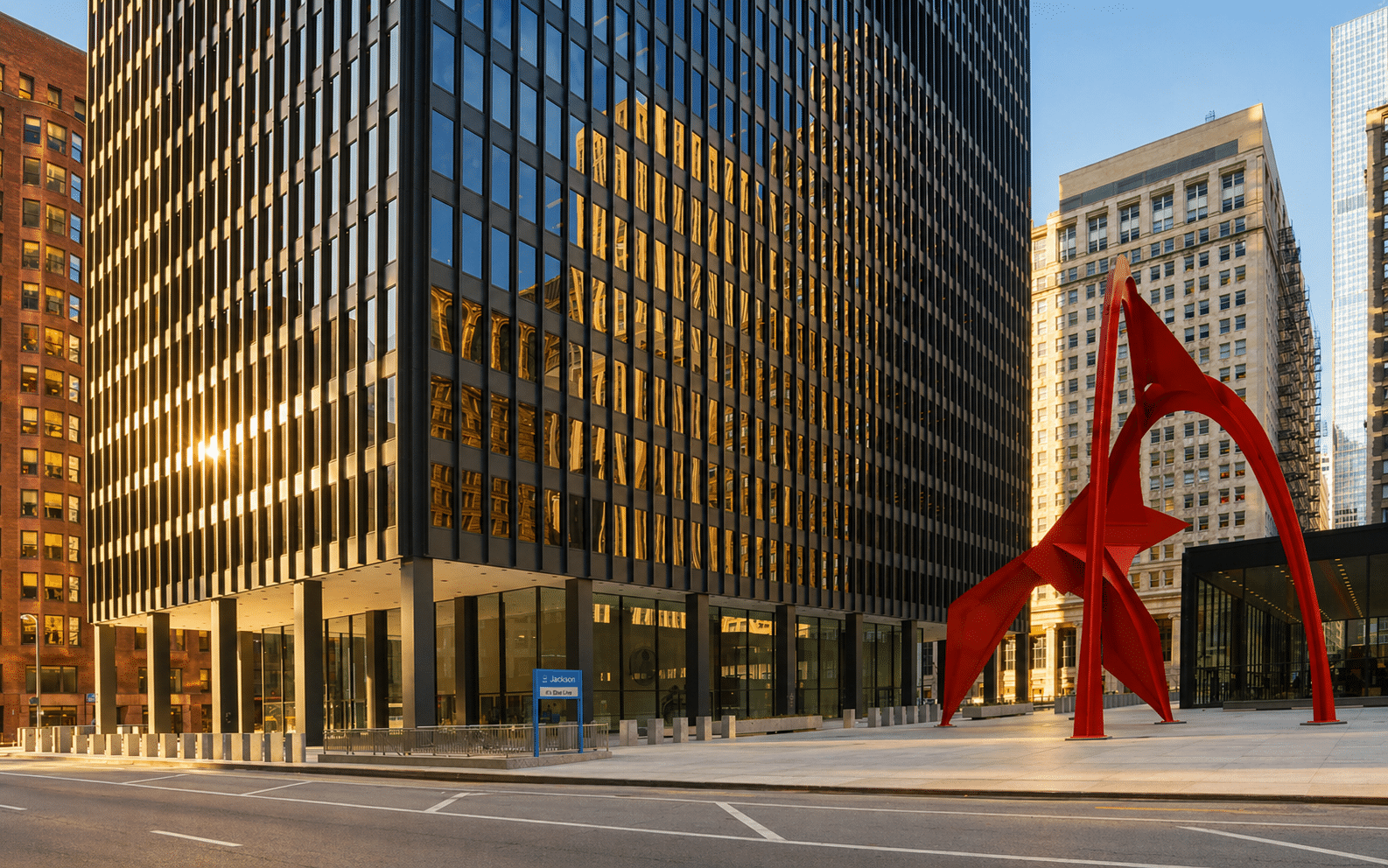
The federal government’s decision to sell off two major Chicago office buildings is sending ripples through an already struggling market. The John C. Kluczynski Federal Building and the Ralph H. Metcalfe Federal Building, located in the Loop, are slated for sale as part of a nationwide effort to reduce the government’s real estate footprint.
With Chicago’s downtown office market already facing record-high vacancy rates, this move could significantly impact landlords, tenants, and investors. The sale of two million square feet of government office space raises critical questions: What does this mean for office landlords? Will it create new opportunities or further destabilize the market? And what should businesses be thinking about as these changes unfold?
The federal government’s decision to shed millions of square feet of space adds to this challenge. More supply entering the market—especially government-leased properties with aging infrastructure—will put additional downward pressure on leasing activity, rents, and even property valuations.
Why Is the Government Selling Its Chicago Offices?
Chicago isn’t alone in this trend. Federal agencies are downsizing office space across the country, meaning local landlords who rely on government tenants may need to rethink their strategies.
Impact on the Chicago Office Market
1. More Vacant Space, Lower Rents
Bringing two million square feet of office space onto the market will create more competition among landlords, making it harder to lease existing space. Many of these government-leased buildings are older and in need of updates, meaning they will likely struggle to attract private-sector tenants without major investment.
With a softening demand for traditional office space, rents could decline even further as landlords cut deals to compete for a shrinking pool of tenants.
2. More Distressed Office Buildings & Sales
Owners of struggling office properties may be forced into distressed sales as values decline. Over the past two years, several downtown office buildings have sold for steep discounts, and this trend is likely to continue.
With rising interest rates and fewer buyers for outdated office properties, we may see more loan defaults, foreclosures, and ownership changes in Chicago’s office market.
3. Potential for Office-to-Residential or Mixed-Use Conversions
If you own office space in the Loop, expect increased pressure on leasing activity and property values. With more vacant space hitting the market, tenants will have greater bargaining power, and landlords will need to offer competitive lease terms, amenities, and build-outs to attract quality tenants.
Now is the time for landlords to:
Assess their financial health and debt obligations.
Consider repositioning assets if they’re struggling to lease space.
Proactively engage with tenants to prevent further vacancies.
For Tenants: More Leverage in Lease Negotiations
If you’re a tenant renewing or looking for new office space, this shift presents an opportunity to secure favorable lease terms. Landlords are more open to concessions, including:
Lower base rents
More flexible lease terms
Build-out allowances
With more space becoming available, tenants should evaluate the financial health of their landlord before signing long-term leases. Properties that are struggling financially may face ownership changes, impacting property maintenance and stability.
The Future of Chicago’s Office Market
The sale of two major federal buildings is just the latest sign that Chicago’s office market is undergoing a major transformation. With high vacancy rates, changing work patterns, and increased financial pressures on landlords, the landscape will continue to shift in 2025 and beyond.
While some properties will struggle to remain competitive, others will find new life through adaptive reuse, creative leasing strategies, and emerging tenant demand for unique office spaces. The next few years will be critical for landlords, investors, and tenants navigating these changes.
If you’re a developer looking at office conversions, an investor tracking distressed assets, or a tenant navigating lease negotiations, our Chicago Commercial Real Estate Agents can help you understand the opportunities and challenges in this evolving market.