

Later this month, the Chicago Plan Commission will review an ambitious proposal that could reshape the southern edge of downtown. Related Midwest, in partnership with the Chicago Fire and designed by Gensler, is moving forward with plans to build a $650 million dedicated soccer stadium at The 78, a long-anticipated 62-acre megadevelopment just south of Roosevelt Road along the South Branch of the Chicago River.
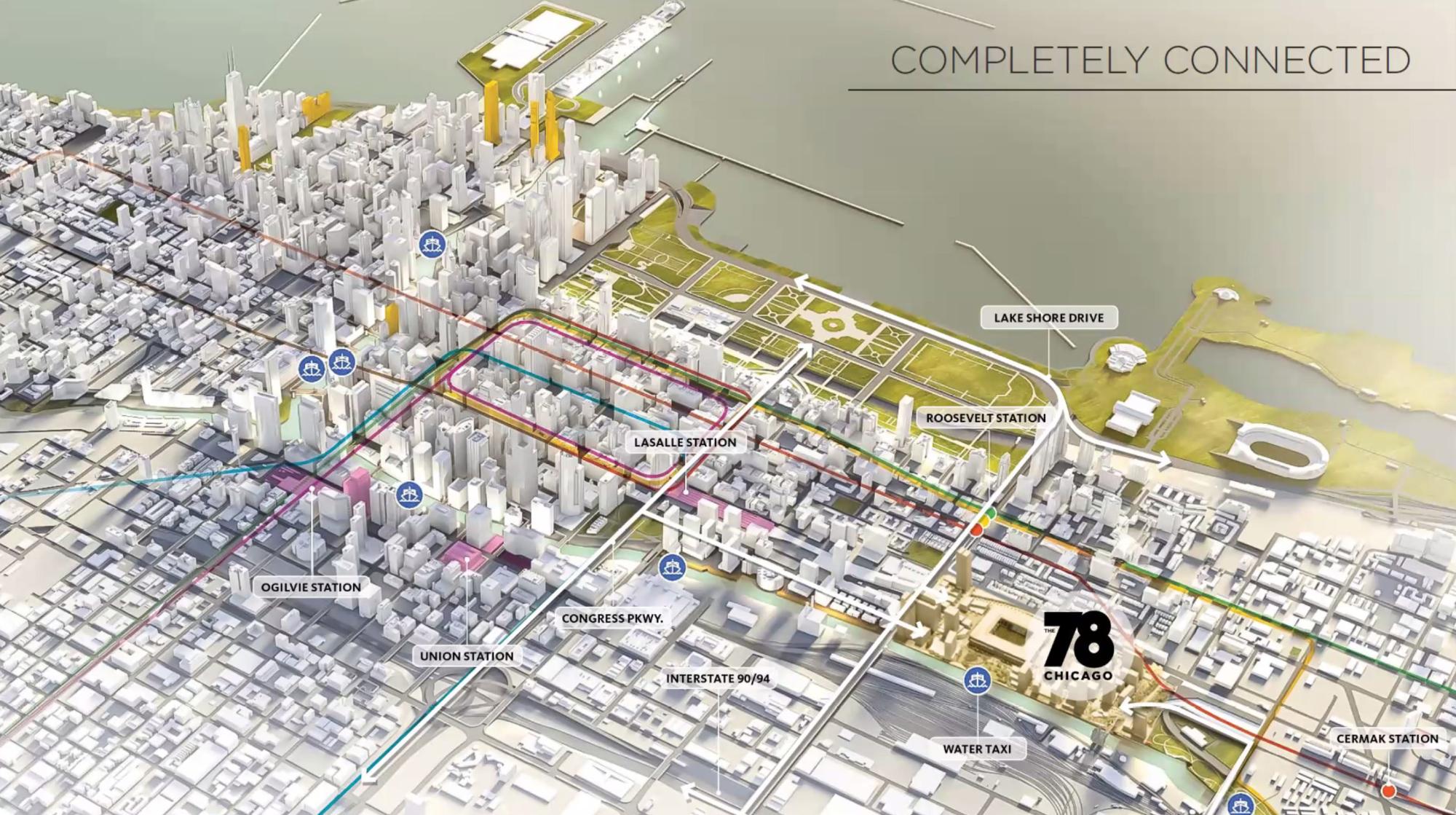
For years, The 78 has been envisioned as Chicago’s “next great neighborhood.” Now, with a world-class MLS venue as its anchor, the project is poised to fuse entertainment, urban design, and mixed-use development in a way that could redefine how the city leverages sports as an economic driver.
A Stadium Rooted in Chicago’s Industrial Heritage
The new stadium design is deliberate in its ties to Chicago’s past. Gensler’s approach leans on industrial space design, as the city’s character, with its brick, steel, and glass, combines to create a facade that feels authentic to Chicago. An exposed steel canopy over the seating bowl not only projects a rugged aesthetic but also enhances the viewing experience, bouncing crowd energy and light back onto the pitch.
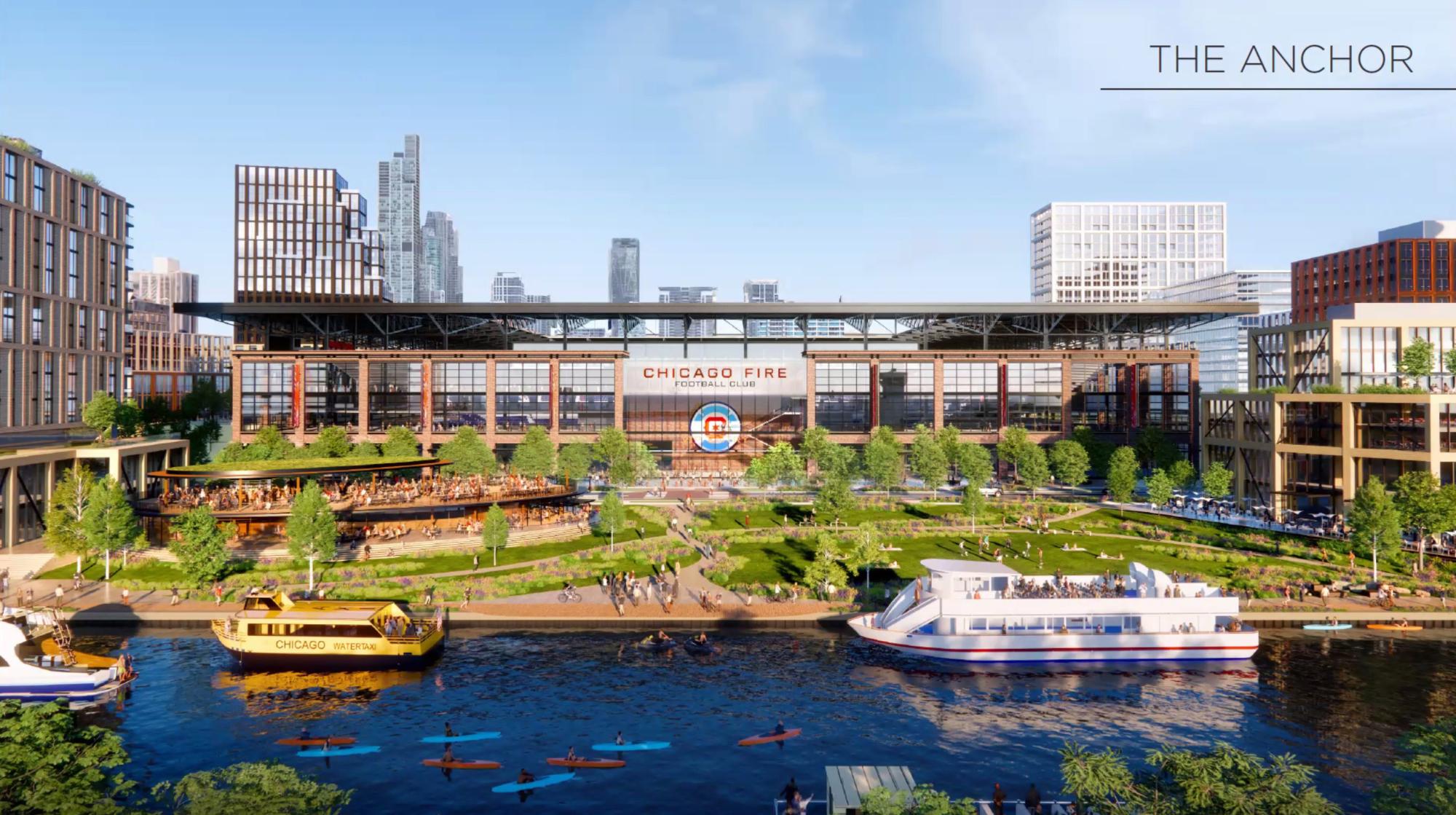
The fan experience is central to the design. With dramatically lower seating positions and safe-standing areas for 2,000 dedicated supporters, the stadium will offer unmatched intimacy. Hospitality will also be a major play: 50 suites, 500+ Loge seats, and 3,500 Club seats across multiple tiers demonstrate a strong push toward premium offerings, an area increasingly crucial in the economics of modern stadiums.
The 78: More Than Just a Stadium
Anchoring The 78 with a sports and entertainment hub is only the first move. Related Midwest’s broader plan weaves together live-work-play elements that could transform this underutilized site into one of Chicago’s most dynamic neighborhoods.
-
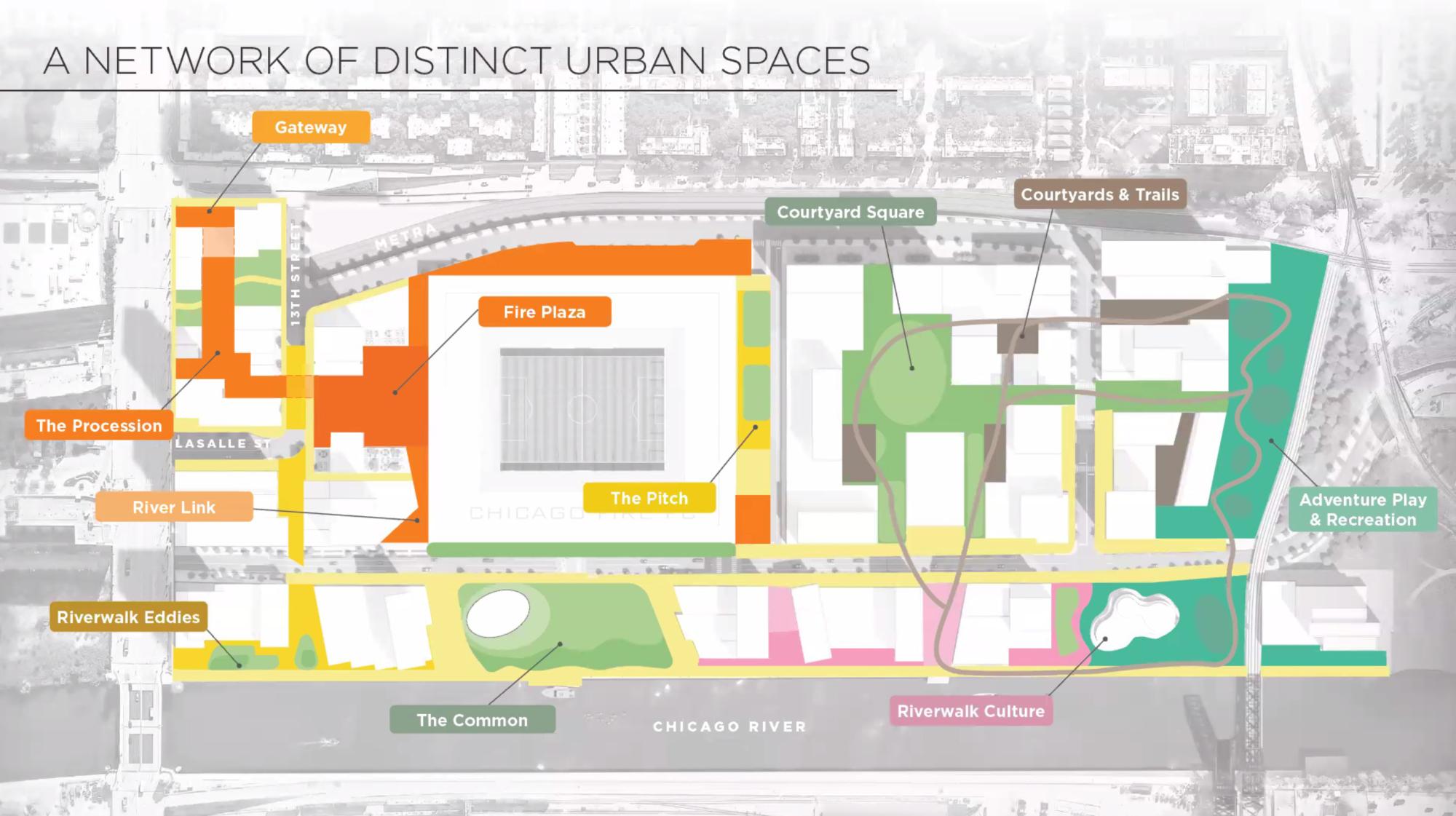
North Entry District: Midrise and high-rise buildings will flank visitors’ entry path, establishing a true gateway into the site.
-
South Residential Area: Beyond the stadium, pocket parks and residential buildings will form a quieter, livable environment.
-
The Wilds: At the far southern end, a major green space will balance the built environment with nature, echoing contemporary urban planning priorities.
-
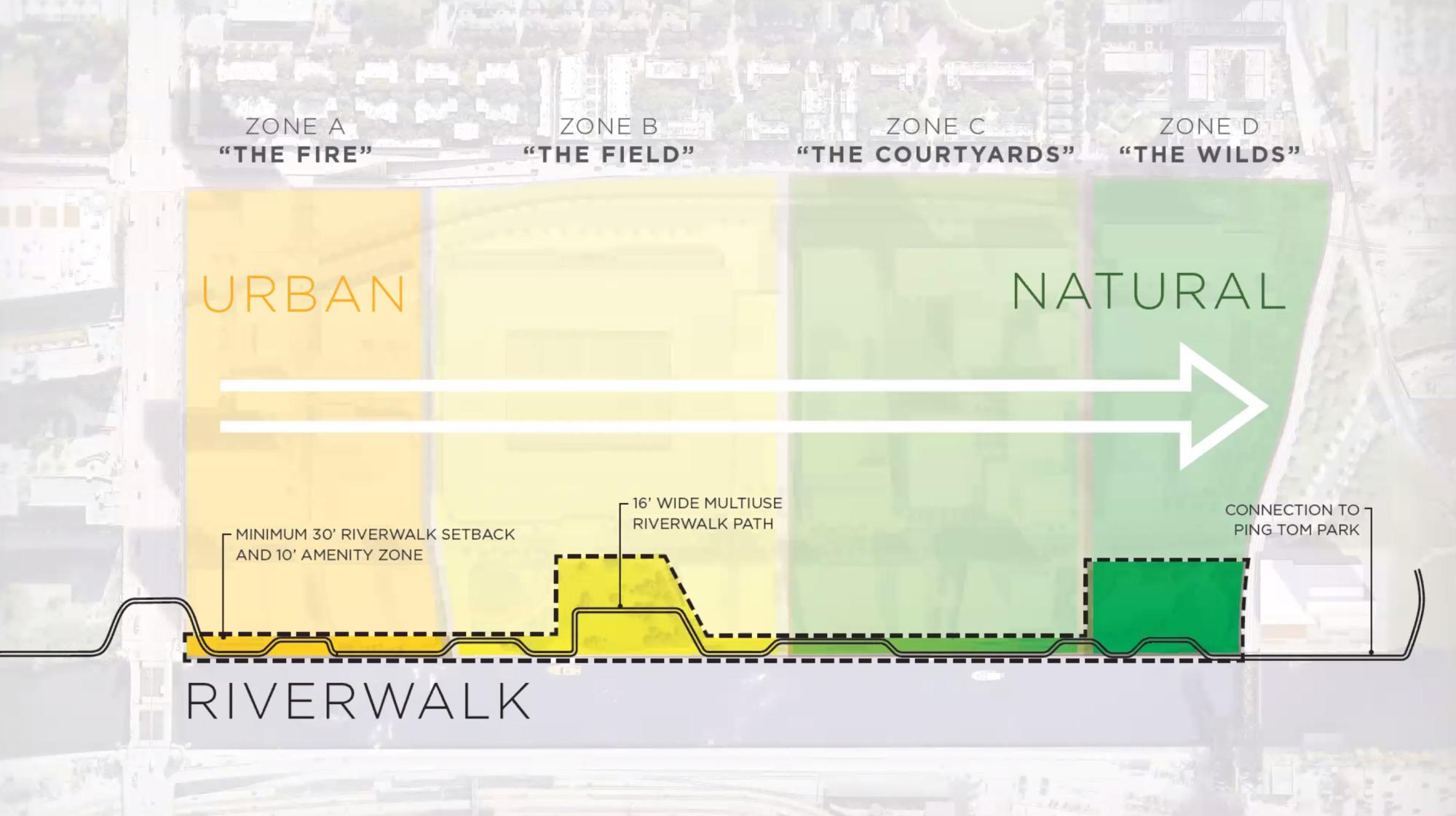
River District: Perhaps most significant for commercial real estate, the development will extend Chicago’s riverwalk southward, linking to Ping Tom Park and eventually the rest of the downtown riverwalk. This creates valuable new waterfront frontage for retail, restaurants, and flexible office space.
What It Means for Chicago’s Commercial Real Estate
The inclusion of the stadium in Phase 1 of The 78 is more than a design decision; it’s a market signal. By leading with a cultural and entertainment anchor, Related Midwest is effectively ensuring foot traffic, visibility, and momentum for subsequent office, residential, and retail development.
For office space, this could be the fresh injection the South Loop needs. Corporate users are increasingly attracted to vibrant, mixed-use neighborhoods with built-in amenities, transit access, and cultural identity. The stadium, riverwalk, and accompanying retail conversion opportunities create a lifestyle district, exactly the type of environment that helps companies attract and retain talent.
For industrial real estate, while The 78 itself is not an industrial site, the ripple effects are clear. The scale of investment, infrastructure, and job creation tied to the project is a signal of confidence in Chicago’s economy. That confidence often translates into continued demand for industrial space in nearby logistics corridors that serve downtown.
For retail and hospitality, the project is transformative. Matchday crowds, local residents, and downtown office workers will converge, giving retailers and restaurants a built-in customer base. The fact that stadium-adjacent retail has been designed with neighborhood integration in mind, rather than as a standalone destination, reflects the modern trend of embedding experiential retail into mixed-use districts.
And for commercial real estate brokers and agents, The 78 represents the kind of marquee development that can reshape leasing conversations across the South Loop. When complete, the project won’t just fill a long-empty site; it will shift perceptions of the entire submarket.
Looking Ahead
The Chicago Fire stadium at The 78 is planned to open in 2028, but its impact on the city’s commercial real estate market has already begun. If approved by the Plan Commission and subsequent city bodies, it will mark the first step in transforming 1411–1435 S. Roosevelt Road and its surrounding acreage into a district where sports, culture, commerce, and community meet.
For Chicago, the story is bigger than a soccer stadium. This is about how thoughtful urban design, one that blends industrial heritage, entertainment anchors, and walkable neighborhoods, can drive long-term value across office space, retail conversion opportunities, and broader commercial real estate markets.