

What Does The 301 S. Wacker Drive Proposal Reveal?
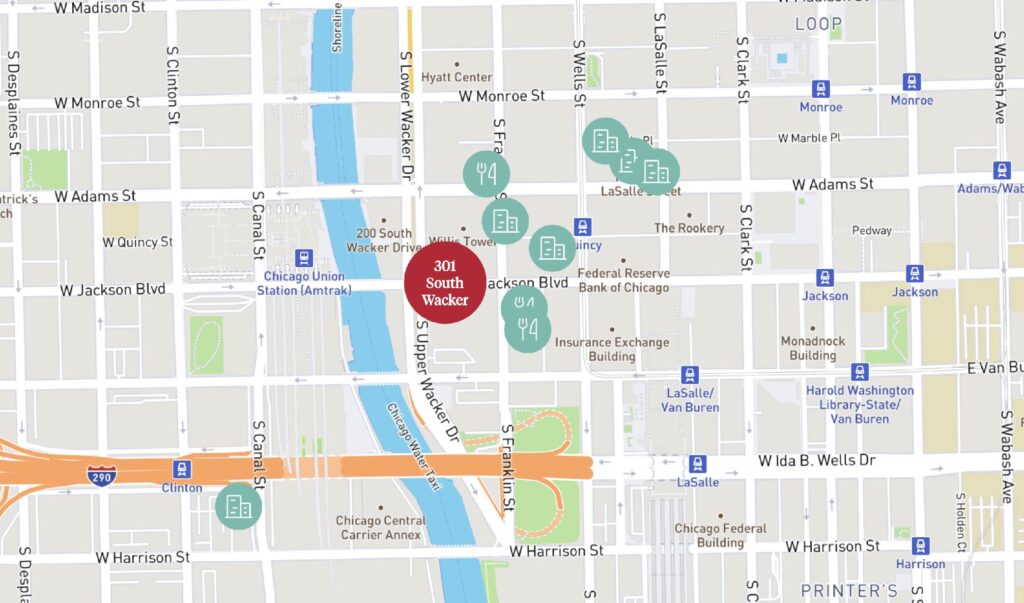
Chicago’s Loop has long been a barometer for the health of the city’s commercial real estate market. When developers bring forward ambitious plans—particularly skyscrapers topping 700 feet—it signals confidence, not just in the downtown office market, but also in Chicago’s broader economic trajectory. The recently updated plans for a 45-story, 800,000-square-foot tower at 301 South Wacker Drive, directly across from Willis Tower, offer a fascinating window into the current state of play.
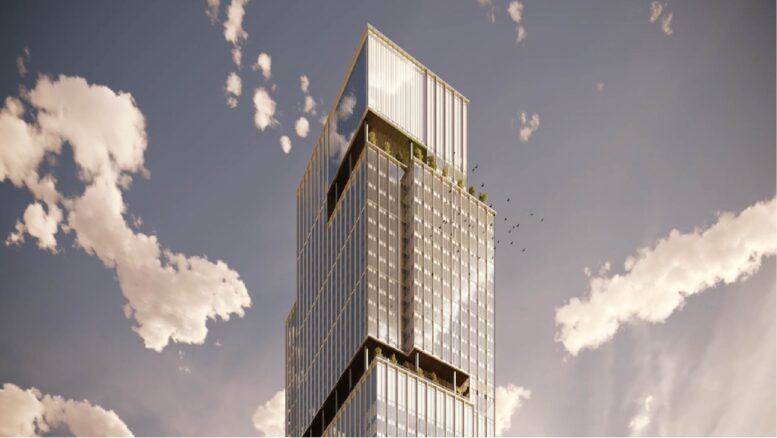
Led by Texas-based developer Hines, designed by Kohn Pedersen Fox (KPF), and positioned as a mixed-use project with office, retail, and lifestyle amenities, the tower proposal is both bold and telling. Let’s break down what this plan says about the Loop’s evolving landscape and how it reflects broader trends in office space, tenant demand, and investment strategy.
A Vote of Confidence in the Loop’s Future
The Loop has endured three difficult years. Remote and hybrid work have shifted office space demand, vacancy rates remain stubbornly high, and landlords face refinancing challenges with elevated interest rates. Against that backdrop, the very existence of an $800 million proposal for new construction at 301 S. Wacker Dr. is striking.
This is not a speculative mid-rise conversion project; it’s a glass-and-steel statement that suggests certain developers still see value in Class A office towers in the Loop. Hines, already responsible for Salesforce Tower at 333 Wacker Drive, is betting that premium design, scale, and amenity-rich features can still draw tenants even when much of the market struggles.
The Amenity Arms Race in Office Space
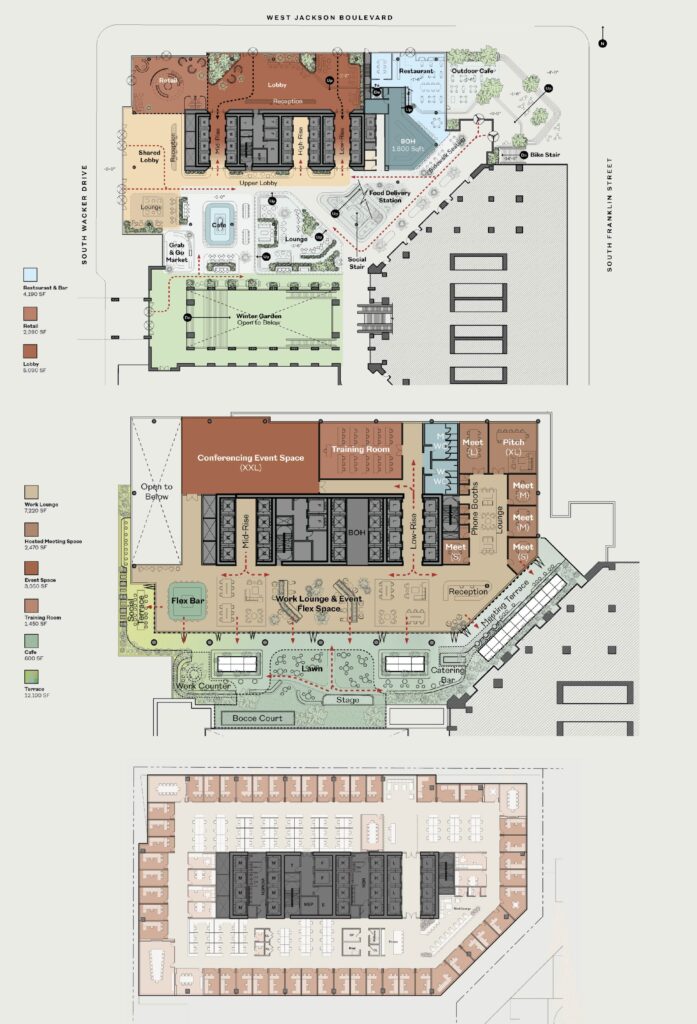
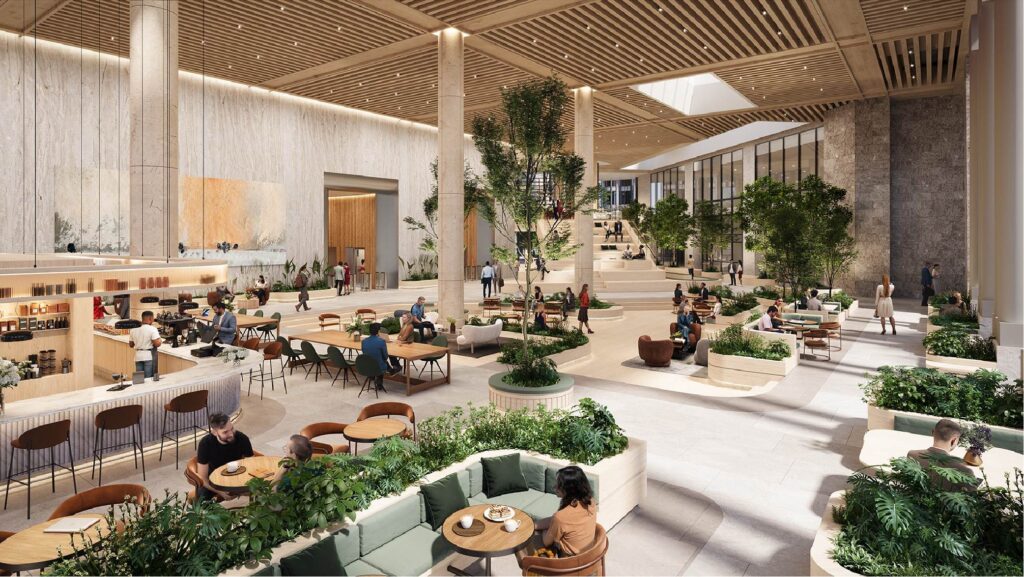
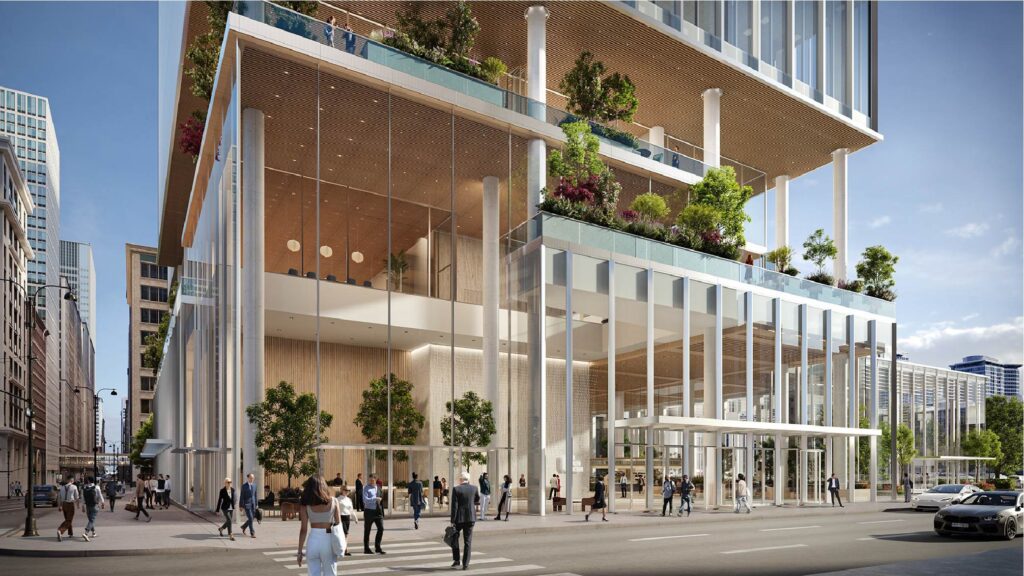
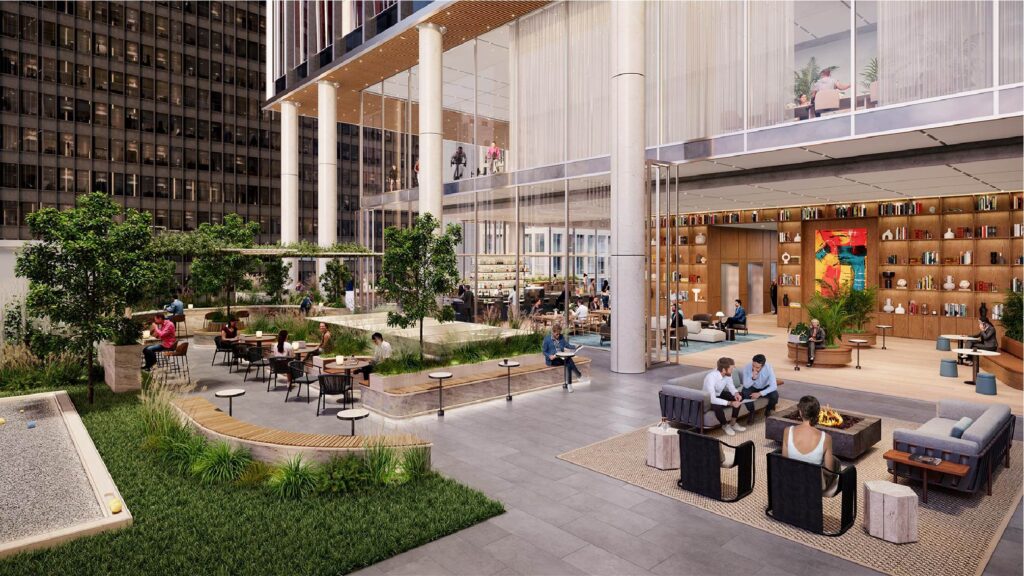
What jumps out most about the 301 S. Wacker proposal is the focus on amenities. Out of 800,000 square feet, 45,000 square feet are dedicated to lounges, bars, and terraces, along with a 20,000-square-foot fitness center and a 10,000-square-foot conference center. These are not afterthoughts; they are essential to the tower’s leasing pitch.
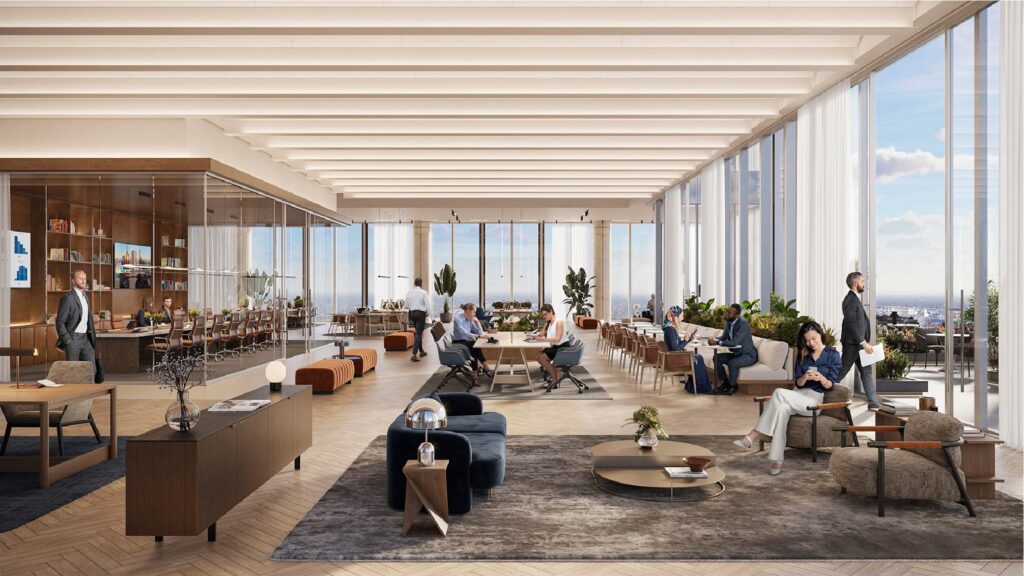
Modern tenants expect office buildings to act more like lifestyle hubs. Post-pandemic, employers know that if they want staff to commute downtown, the workplace must compete with the convenience of home. On-site restaurants, all-day cafés, outdoor terraces, and wellness facilities have moved from “nice extras” to core requirements.
By designing offices with outdoor spaces cut into the tower’s setbacks, Hines is acknowledging another shift: tenants no longer want hermetically sealed, fluorescent-lit boxes. Natural light, fresh air, and biophilic design are integral to workplace appeal.
Repositioning the Loop’s Identity
For years, the Loop has carried a reputation as the buttoned-up center of finance, law, and government. But the reality is changing. With West Loop and Fulton Market capturing the creative, tech, and growth-oriented tenants, the Loop has faced an identity crisis.
Projects like 301 S. Wacker Dr. represent an attempt to reposition the Loop’s brand. By blending office, hospitality, fitness, and social spaces, Hines is borrowing heavily from the Fulton Market playbook while doubling down on location. Being across from Willis Tower and adjacent to 311 Wacker Drive keeps the development within the traditional office core, but the programming is distinctly more lifestyle-driven than what the Loop once offered.

Risks: Vacancy and Financing Challenges
Despite the optimism implied in the renderings, the risks are real. Office space vacancy in downtown Chicago remains above 20 percent, with sublease space still flooding the market. Landing an anchor tenant is a prerequisite for financing, and without one, the tower could stall indefinitely.
Additionally, the sale of neighboring 311 Wacker Drive for $45 million, a steep discount relative to its past valuations, underscores the instability in the Loop office market. If a signature building like 311 Wacker is being repositioned at a loss, lenders will scrutinize any new tower more carefully.
For an $800 million project like this, construction financing will hinge on global capital markets’ willingness to underwrite the long-term health of Chicago’s central business district. That is not a given in today’s climate.
The Twin Forces of Flight to Quality and Obsolescence
The 301 S. Wacker proposal also highlights a major dividing line in Chicago’s office market: the flight to quality. Tenants that are signing new leases overwhelmingly prefer top-tier, highly amenitized towers. Meanwhile, older Class B and C buildings are sliding into obsolescence, facing conversions to apartments, hotels, or other uses.
This bifurcation means that even in a market with high vacancy, there is still genuine demand for trophy assets. For office tenants seeking large floorplates, 25,000 to 28,000 square feet in this case, options are limited. New development creates opportunities for consolidations, relocations, or corporate headquarters seeking a fresh identity.
The Role of Mixed-Use and Ground-Level Activation
The ground floor programming at 301 S. Wacker is another important signal. By incorporating retail, a restaurant, and an all-day café, the design acknowledges the importance of ground-level activation in revitalizing the Loop’s pedestrian experience.
For decades, office towers were inward-facing, with lobbies designed more as corporate thresholds than as social or civic spaces. Post-COVID, developers understand that a building must also contribute to the neighborhood ecosystem. A bustling corner at West Jackson Boulevard and South Wacker Drive could inject energy into an area that has seen quieter sidewalks during hybrid work weeks.
A Signal to Investors: Scale Still Matters
With its projected crown height above 700 feet, 301 S. Wacker would become a new icon on the skyline. This scale matters not just for aesthetics, but for investment signaling. Large institutional tenants and global investors often prefer buildings that are visibly “trophy assets.”
Even as smaller office conversions continue across Chicago, mega-projects like this remind us that scale remains a differentiator. For Hines, already operating at the global level, building another Loop skyscraper is as much about corporate brand positioning as it is about leasing space.
Unanswered Questions
Several key questions remain:
-
Will an anchor tenant commit? Without a prelease from a major law firm, tech company, or financial institution, financing will be a stretch.
-
How will the project interact with 311 Wacker’s new owners? Coordinated redevelopment could boost both sites, but conflicting visions could slow progress.
-
Will the city support new office construction amid surplus supply? Chicago officials may prefer conversions or residential infill over approving more office square footage.
What It Means for Commercial Real Estate Brokers and Tenants
For a commercial real estate broker working in the Loop, 301 S. Wacker signals two realities:
-
Flight to quality is alive and well. Tenants are still willing to pay a premium for office space that offers lifestyle perks, cutting-edge design, and prime location.
-
Timing is everything. With capital markets in flux, any tenant looking for large contiguous space in the next five years should watch this project closely. Pre-leasing could lock in favorable terms before the building’s completion, while waiting too long could mean competing for limited premium availability.
For tenants, the project reinforces that the future of downtown Chicago is not uniform decline but selective reinvestment. The Loop may lose older commodity towers, but it will simultaneously attract next-generation projects designed for the hybrid era.
Conclusion
The updated plans for 301 South Wacker Drive are more than just a new set of renderings, they are a window into the commercial real estate market’s psychology. They reveal both optimism and caution: optimism that tenants still want trophy towers, and caution that only the very best buildings will succeed.
For the Loop, the proposal suggests that the path forward is not to retreat from office space but to reinvent it, to make it more social, more wellness-driven, more connected to the city around it. If realized, the tower would join Salesforce Tower and other modern icons as proof that Chicago’s central business district remains a place where big bets can still be made.
Whether it gets built will depend on the willingness of anchor tenants and investors to align behind the vision. But even as a proposal, 301 S. Wacker tells us that the Loop is not finished, it is evolving, and developers like Hines are still willing to stake their future on its success.