

In an era where tenant experience, sustainability, and long-term asset value increasingly drive underwriting decisions, developers are rethinking what makes a commercial real estate or institutional asset truly high-performing. One of the most compelling shifts in contemporary real estate is the increasing adoption of natural elements, especially mass timber, not just as a design choice, but as a strategic lever for psychological well-being, sustainability performance, and financial outcomes.
This conversation was vividly illustrated in The Real Finds Podcast episode RFP 85, where host Gordon Lamphere sat down with structural engineer and professor Justin Den Herder to unpack why mass timber is more than an aesthetic novelty and is rapidly becoming a serious contender in commercial building portfolios.
What Is Mass Timber and Why It Matters
Mass timber refers to a family of engineered wood products, cross-laminated timber (CLT), glue-laminated timber (glulam), nail-laminated timber (NLT), and dowel-laminated timber (DLT), that can be used structurally in large buildings, rivaling traditional materials like steel and concrete in strength and performance.
In the Real Finds conversation, Den Herder explained that mass timber has evolved from architectural eye-candy into a competitive structural system (lighter weight, high strength-to-weight ratio), which can enable adaptive reuse projects, taller timber buildings under modern codes, and more flexible design iterations.
From a market perspective, mass timber construction is experiencing significant growth. Recent industry research estimates that the global mass timber construction sector was valued at nearly $990 million in 2024, with projections to reach roughly $1.3 billion by 2030, growing at a 4.8% CAGR across 2024–2030.
Another forecast suggests even stronger growth, with the market potentially expanding to around $1.8 billion by 2030 at a 7.4% CAGR, driven by demand for sustainable construction alternatives.
This data reflects broader shifts within real estate, where environmental, social and governance (ESG) criteria are no longer niche but are core to investment decision-making and tenant demand.
Mass Timber and the Psychological Impact of Natural Materials
The physics and market growth tell only part of the story. Perhaps the most transformative aspect of mass timber, and natural materials more broadly, is their impact on the human experience inside commercial buildings.
The field of biophilic design suggests that humans have an innate need to connect with nature. When buildings incorporate natural elements such as wood, daylight, vegetation, and organic textures, occupants regularly demonstrate improved psychological outcomes.
Specific research on environments rich in timber reveals:
- Reduced stress and improved mood: Exposure to wood surfaces and natural materials has been associated with lower sympathetic nervous system activation and decreased chronic stress.
- Enhanced cognitive and emotional functioning: Biophilic components, including wood, have been shown to improve cognitive performance and increase positive emotional states.
- Greater occupant comfort and satisfaction: Office environments with timber surfaces can improve thermal comfort perception and subjective well-being compared to conventional materials.
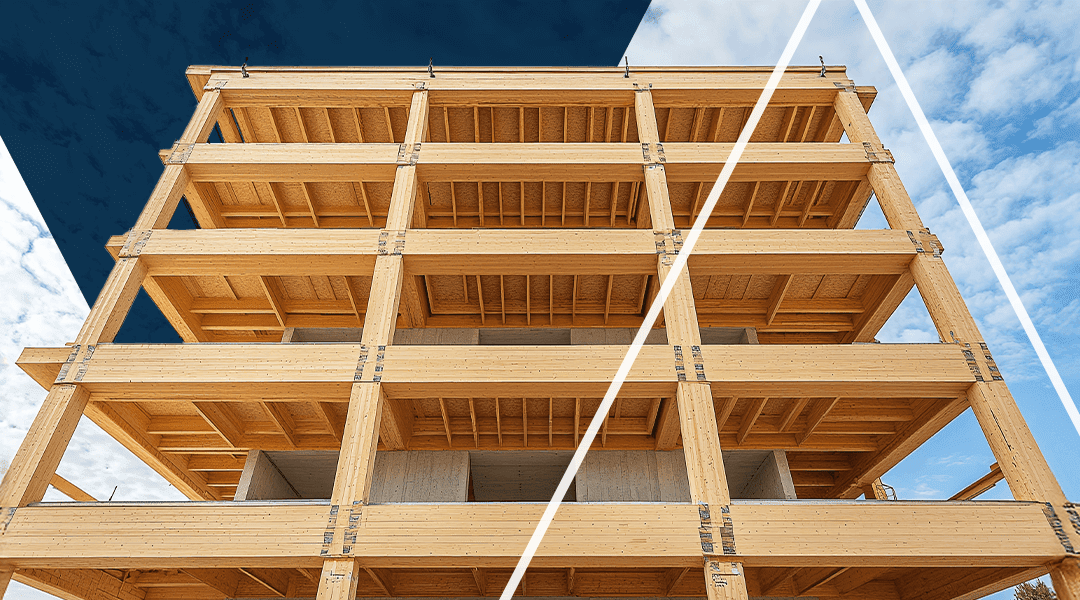
These outcomes are not just academic. In commercial real estate, occupant satisfaction correlates with higher productivity, longer lease terms, and premium rents, outcomes that directly influence NOI (net operating income) and valuations.
Moreover, buildings designed with natural materials and daylight optimization are statistically more attractive to tenants, with some studies showing that properties with abundant biophilic elements can command rent premiums of 7–15% and achieve higher occupancy rates.
Psychological Well-Being Meets Market Demand
What makes mass timber compelling for commercial real estate is that its benefits sit at the intersection of psychology, sustainability, and economics:
- Psychological well-being: Tenants increasingly prioritize “healthy buildings,” and owners who integrate natural materials can differentiate their asset in competitive markets.
- Sustainability metrics: Unlike steel and concrete, which contribute significant embodied carbon, mass timber stores carbon as it grows and through its life in the building, a key factor in carbon accounting and green certification strategies.
- Design efficiency: Prefabricated mass timber systems can significantly reduce construction timelines and waste, creating lower site disturbance and faster lease-up potential.
In the podcast with Den Herder, this convergence was a repeated theme: mass timber is not just a construction material, but a strategic asset class enhancer that improves tenant experience, reduces carbon footprint, and opens adaptive reuse opportunities for aging properties.
Commercial Outcomes: Productivity, Retention, and Lease Performance
Several industry analyses on biophilic design substantiate that buildings incorporating nature-inspired features, including wood, often outperform competitors:
- Tenant attraction and retention: Commercial spaces designed with natural elements can see higher appeal, translating into lower vacancy and turnover risk.
- Improved performance metrics: Natural materials have been linked with increases in tenant productivity and wellness, a key consideration for office landlords competing in a hybrid work environment.
- Higher asset value: Properties embracing biophilia and natural materials stand to command higher sale prices and lease rates due to perceived quality and sustainable branding value.
From a financial standpoint, these qualitative benefits convert into quantifiable returns by enhancing occupancy, deepening tenant relationships, and supporting long-term asset performance.
Case Studies and Real Projects Advancing the Trend
Globally, mass timber is already shifting skylines and real estate portfolios:
- Ascent MKE in Milwaukee stands as the world’s tallest mass timber hybrid building, demonstrating the structural viability of timber systems in mid-to-high-rise applications.

- Carbon12 in Portland, Oregon provides a successful example of mass timber in mixed-use development with strong environmental and occupant satisfaction metrics.
- Large urban initiatives such as Stockholm Wood City aim to use timber for thousands of homes and office spaces, pushing sustainable design at city scale.
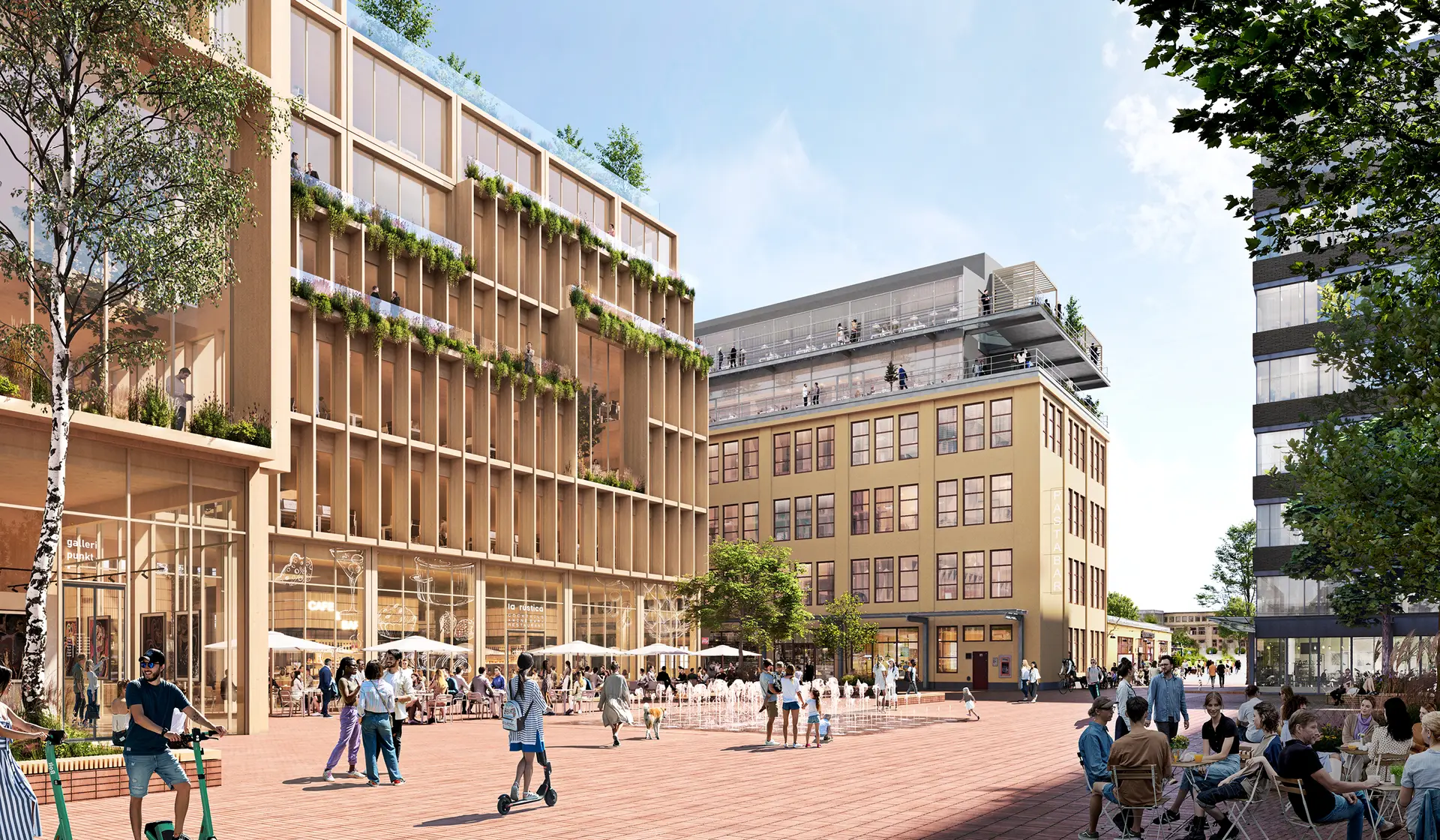
These projects showcase the real estate industry’s willingness to move beyond traditional materials and embrace nature-based approaches that deliver environmental and psychological performance while still meeting code and financial requirements.
Conclusion: A Strategic Shift in Asset Design
Natural materials, especially mass timber, are no longer a niche architectural statement. They represent a strategic differentiation tool for commercial and institutional real estate stakeholders seeking competitive advantage in a crowded market.
From the psychological benefits of biophilic design to the measurable growth of mass timber adoption globally, and from tenant satisfaction to sustainability imperatives embedded in underwriting, natural materials are reshaping what it means to build assets that perform across multiple dimensions.
As Justin Den Herder emphasized on The Real Finds Podcast, mass timber sits at the intersection of economics, sustainability, and human experience, making it a compelling choice not just for environmental stewards, but for developers, investors, architects, and tenants alike. vvco.com
In practical terms, commercial real estate professionals should consider mass timber not just as a material choice, but as a value driver, enhancing occupant well-being, aligning with ESG goals, and differentiating assets in both lease and sales markets.