

A New Era Under Cook County Assessor Pat Hynes?
In an upset that sent shockwaves through Chicago’s real estate community, Lyons Township Assessor Pat Hynes defeated two-term incumbent Fritz Kaegi in the Cook County Democratic primary on March 17, 2026. Hynes took 52.5% of the vote to Kaegi’s 47.5%, a rare defeat of a sitting countywide incumbent. With no Republican currently on the ballot, Hynes is effectively the next Cook County Assessor.
For property owners, developers, landlords, and renters across the region, this isn’t just a political story. It’s potentially a structural turning point for how Chicago’s $19 billion annual property tax burden gets divided.
The Numbers That Defined the Race
- 1.8 million — property parcels across Cook County subject to reassessment
- $19 billion — the annual Cook County property tax bill being re-allocated among those parcels
- $444 million — in assessed property value missed under Kaegi due to misclassified and overlooked new construction
- 133% — the increase in median homeowner property tax bills in West Garfield Park under Kaegi’s most recent assessment cycle
What Went Wrong Under Kaegi
Fritz Kaegi entered office in 2018 as a reformer. His central promise was to end the pay-to-play era of his predecessor Joe Berrios, where connected property tax attorneys secured steep reductions for wealthy commercial landlords effectively shifting the tax burden onto residential owners who lacked the resources or knowledge to appeal.
By many measures, Kaegi made residential assessments fairer. A University of Chicago study confirmed that, for the first time in years, residential assessments fell within industry standards. But the story soured on two critical fronts.
First, commercial property owners aggressively appealed Kaegi’s assessments at the Cook County Board of Review and won. Large reductions for office buildings, hotels, and retail centers slid the tax burden back onto homeowners anyway. On Chicago’s South and West Sides, families saw their bills climb by thousands of dollars annually. West Garfield Park experienced a 133% increase in the most recent cycle.
Second, Kaegi’s office was found to have missed at least $444 million in assessed property value, misclassifying properties and failing to capture new construction and major renovations. Vacant lots where luxury homes had been built were still taxed at vacant-lot rates, quietly subsidizing wealthier homeowners while shrinking the overall tax base.
“When institutional investors pitch Chicago, they’re told: ‘We’re not touching it. Your tax system is a mess.'” — Farzin Parang, Executive Director, BOMA Chicago
Who Is Pat Hynes?
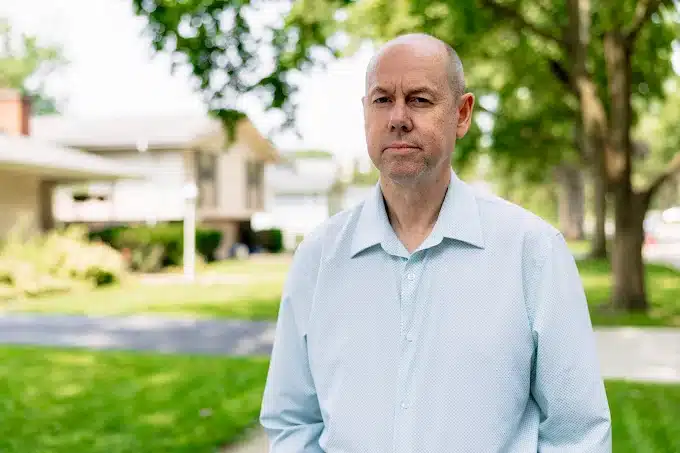
Hynes is not a political outsider. He spent 23 years as a field inspector in the Cook County Assessor’s Office, holds a Bachelor of Science in Real Estate from DePaul University, and has served as Lyons Township Assessor since 2021. He was slated by the Cook County Democratic Party and backed heavily by the real estate industry.
Top developers including Magellan Development CEO David Carlins, CRG CEO Shawn Clark, and Riverside Investment CEO John O’Donnell all made five-figure donations to his campaign. The Chicagoland Chamber of Commerce supported him, as did PACs tied to hotel owners, merchants, and construction unions.
His platform centered on three pillars: cleaning up the data underlying assessments, hiring more field inspectors to capture new construction, and creating a new Department of Economic Development within the Assessor’s Office to attract and retain investment across Cook County.
What This Means for Commercial Real Estate
The near-term signal for commercial investors is cautiously optimistic. The industry’s central complaint under Kaegi wasn’t simply that their tax bills were too high, it was that they couldn’t predict what those bills would be from year to year. That volatility made it nearly impossible to underwrite new development projects.
“The market moves in a fairly predictable and steady pace. When you insert that kind of volatility and unpredictability, it makes it very difficult for someone to pencil out on their pro forma what the most expensive line item is going to be.” — Pat Hynes
Hynes has pledged to pre-model valuations for large commercial developments so investors can get a reliable assessment estimate before they break ground. For industrial and logistics developers, a booming sector across the Chicago metro, this kind of upfront clarity would meaningfully reduce financing risk.
For Loop office, retail, and mixed-use, the bigger question is whether Hynes can produce accurate initial assessments that hold up at the Board of Review. If commercial assessments are defensible from the start, fewer appeals get filed, fewer cuts get granted, and the structural shift of burden onto residential owners slows down. That is the outcome the industry is counting on.
Chicago rent growth was the highest in the Midwest as of early 2026, according to CoStar data, with property tax unpredictability cited as a major driver. If Hynes stabilizes the commercial assessment environment, the downstream effect on rents and on multifamily development pipeline could be significant within the next two to three years.
What This Means for Residential Real Estate
Here, the picture is more nuanced, and the stakes are just as high.
Kaegi’s supporters are right that residential equity improved on his watch. The University of Chicago analysis confirmed assessments were tracking market values more accurately across income levels a real departure from the Berrios era. That progress is at risk if the new administration tilts back toward commercial interests.
The concern is Hynes’ fundraising. His campaign accepted over $106,000 from property tax appeals attorneys the same professionals who profit when commercial assessments are successfully appealed downward, pushing the burden back onto homeowners. Kaegi was blunt about it: “When big commercial properties get tax cuts they don’t deserve, homeowners pay for it.”
Hynes argues the opposite: that well-documented, data-driven assessments will reduce the total volume of appeals over time, because property owners will have less basis to challenge them. If that holds, the system-wide volatility that hammered South and West Side homeowners with massive bill increases could actually diminish.
For homeowners in neighborhoods like Englewood, West Garfield Park, and the broader Southland communities hardest hit by Kaegi-era bill increases, the calculus depends entirely on execution. If Hynes closes the $444 million gap in missing assessed value by capturing new construction accurately, and if commercial assessments stabilize rather than collapse through appeals, the residential burden could actually ease.
The Bottom Line for Chicago Real Estate
Pat Hynes’ election is the strongest signal in eight years that Chicago’s notoriously volatile property tax environment may be stabilizing. The commercial real estate community’s financial and organizational backing of Hynes reflects genuine market frustration with years of unpredictability, and genuine optimism that a more operationally focused assessor can restore confidence.
For residential owners, the outcome is less certain. The equity gains of the Kaegi era are real but fragile. Whether they survive a new administration that is friendlier to the commercial and appeals attorney community will depend on the specific assessment decisions Hynes makes in his first reassessment cycle.
The general election in November is a formality. The transition that matters is already underway. Investors, developers, homeowners, and advocacy groups are all watching the same question: will the new assessor deliver predictability for everyone, or predictability for some at the expense of others?
The next 18 months of assessment decisions will be the real verdict. For more, reach out to our team of Chicago commercial real estate agents.