

In a downtown office market still defined by uncertainty, the news that a joint venture is lining up a $700 million refinancing for the tower at 300 S. Wacker Drive is more than a headline. It is one of the clearest indicators in years that capital is beginning to separate Chicago’s office assets into long-term winners and long-term write-downs. At a time when many Class B and Class C buildings cannot secure fresh debt, this single transaction provides an unusually sharp view into the future of the Chicago office market and the factors that will shape which buildings survive.
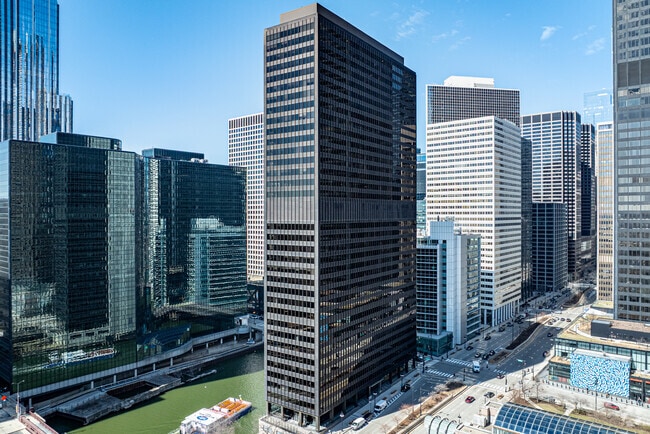
This refinancing does not simply reflect the health of one building. It reflects a structural reshaping of downtown Chicago’s office ecosystem. It also helps clarify what lenders, institutional owners, and tenants believe about the future of the Loop and the broader West Loop riverfront corridor.
1. The Market Now Has a Clear Group of “Survivor Class” Assets
If you want to understand who will endure the next cycle, you have to watch the movement of capital. In the current environment, capital tells the truth more directly than leasing brochures or optimistic marketing packages. The ability to refinance a major Wacker Drive tower at this scale indicates that the building sits in a shrinking group of assets that lenders still view as safe, durable, and future-ready.
These properties often share several characteristics. They have strong tenancy, strategic riverfront or transit-oriented locations, modernized infrastructure, efficient floor plates, and upgraded amenity packages that support tenant retention. Most importantly, they still command the interest of lenders who believe that the next decade of office occupancy will concentrate in a smaller number of higher performing buildings.
This refinancing mirrors the broader performance gap in downtown Chicago. Trophy and near-trophy assets continue to post higher occupancy, sometimes above 90 percent. Mid tier buildings remain dependent on well-capitalized owners who can self-fund large tenant improvement packages. Older and unimproved buildings are struggling to compete, and many are effectively locked out of the capital markets.
The market is drawing a map of which buildings deserve to exist in the 2030s. This refinancing is a marker on that map.
2. Capital Markets Have Redefined What “Office” Means in 2025
Before the pandemic, office was considered a reliable income producing corner of Industrial Real Estate and commercial real estate more broadly. Today, lenders separate buildings into three categories that function more like entirely different asset classes.
The first category is the keeper class. These buildings are well located, upgraded, well amenitized, and able to attract credit tenants. Lenders still compete for these deals, which is exactly what is happening on Wacker Drive.
The second category is the transitional class. These buildings could stabilize, but only with new capital, significant repositioning, or a substantial reset on valuation.
The third category is the conversion class. These buildings are often better suited for adaptive reuse, such as office conversion to residential, laboratory space, or data center use.
A refinancing of this size suggests that institutional lenders now have confidence in the future viability of certain buildings in Chicago. That confidence has been largely absent from the broader office market since 2020, which makes the Wacker Drive refinancing a notable turning point.
3. Debt Availability in Chicago Remains Selective but Not Frozen
It would be a mistake to interpret this refinancing as evidence that lenders have broadly returned to Chicago office deals. Debt availability remains limited for many assets. Rising interest rates, reduced valuations, hybrid work patterns, and limited leasing velocity continue to restrict financing options for most older or commodity buildings.
However, the Wacker Drive transaction demonstrates that lenders are not avoiding Chicago entirely. What they are doing is applying a much more selective filter. Buildings that demonstrate creditworthy tenants, proven leasing traction, and owner willingness to invest in upgrades can still secure financing. Buildings that do not meet those criteria face an uphill climb.
This selective lending environment is shaping the next wave of office competition. Well equipped owners can push forward. Smaller owners with thin capital reserves may face difficult choices.
4. This Could Accelerate the Restructuring of the LaSalle Street and Central Loop Corridor
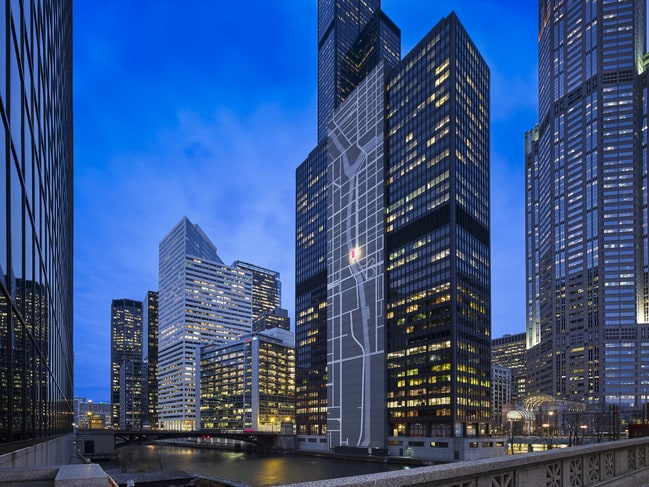
Chicago’s most troubled office corridor sits only a few blocks away. The LaSalle Street corridor continues to wrestle with high vacancy, weak demand, and buildings that may be functionally obsolete. The City of Chicago has embraced office-to-residential conversion initiatives to help reposition outdated stock. The Wacker Drive refinancing will deepen the contrast between healthy buildings on the river and struggling buildings on LaSalle Street.
It also highlights the need for structural change in the central Loop. As financing strengthens around high-quality riverfront assets, older buildings further east may undergo additional valuation resets that make conversion financially feasible. This could accelerate the next wave of adaptive reuse projects and further concentrate active office demand in a smaller geography.
5. The Future of Office in Chicago Will Be Defined by Fewer Buildings and More Capital Per Building
The long-term picture is becoming clearer. Chicago will still have a strong office market, but it will consist of fewer buildings. Those that survive will attract more capital, more amenities, and more tenant-focused investment. Those that fall behind will face redevelopment or repositioning.
The Wacker Drive refinancing shows that capital is willing to support these healthy assets. It also highlights the contrast for commodity buildings that cannot meet modern tenant expectations. Chicago’s office market will not stabilize uniformly. It will stabilize through concentration.
This is the beginning of that process, not the end.
For more on Chicago office space, reach out to our team of commercial real estate agents!